JASCAYD Film-coated tablet Ref.[116755] Active ingredients: Nerandomilast
Source: European Medicines Agency (EU) Revision Year: 2026 Publisher: Boehringer Ingelheim International GmbH, Binger Strasse 173, 55216 Ingelheim am Rhein, Germany
5.1. Pharmacodynamic properties
Pharmacotherapeutic group: Selective immunosuppressants
ATC code: L04AA61
Mechanism of action
Nerandomilast is a selective inhibitor of phosphodiesterase 4 (PDE4) with preferential inhibition of the PDE4B isoenzyme over PDE4A, C and D. There is a 9-fold selectivity over PDE4D, 24-fold selectivity over PDE4A and 870-fold selectivity over PDE4C based on in vitro data. At the recommended doses, inhibition of PDE4B and weaker inhibition of PDE4D can be expected. PDE4 hydrolyses and inactivates cyclic adenosine monophosphate (cAMP). Nerandomilast exerts both anti-fibrotic and immunomodulatory effects as preferential PDE4B inhibition elevates intracellular cAMP levels and reduces the expression of pro-fibrotic growth factors and inflammatory cytokines, which are overexpressed in fibrotic lung disease.
Pharmacodynamic effects
Cardiac electrophysiology
At single doses of nerandomilast up to 48 mg (2.2-times the estimated Cmax,ss exposure at the maximum recommended human dose), clinically significant QTc interval prolongation was not observed.
Clinical efficacy and safety
Idiopathic Pulmonary Fibrosis (IPF)
A randomised, double-blind, placebo-controlled trial (FIBRONEER-IPF) evaluated the clinical efficacy and safety of nerandomilast in adult patients with IPF with or without receiving background treatment of nintedanib or pirfenidone. Patients were required to have a Forced Vital Capacity (FVC) greater than or equal to 45% of predicted and a diffusing capacity of the lungs for carbon monoxide (DLCO) greater than or equal to 25% of predicted normal corrected for haemoglobin (Hb). 1 177 patients were randomised in a 1:1:1 ratio to receive nerandomilast 9 mg twice daily, nerandomilast 18 mg twice daily, or placebo twice daily for at least 52 weeks. Randomisation was stratified by the presence of nintedanib or pirfenidone versus the absence of these background treatments at baseline. The primary endpoint of the trial was the absolute change from baseline in FVC in mL at 52 weeks compared with placebo. The key secondary endpoint was the time to the first occurrence of any of the components of the composite endpoint: first acute IPF exacerbation, first hospitalisation for respiratory cause, or death over the duration of the trial. Patients were followed for a median time of 14.6 months at the time of main analysis and 17.0 months at the end-of-trial analysis.
The study population consisted of 83% men and 17% women with a mean age of 70 years (range: 42 to 90 years). 31% of patients were 75 years and older. 68% of the study population were White, 32% Asian and 0.5% Black/African American. Pulmonary hypertension was reported in 3% of patients at baseline. 78% of the patients were on stable treatment with nintedanib (46%) or with pirfenidone (32%) and 22% were on none of these treatments (15% of patients were treatment naïve and 8% previously discontinued treatment with nintedanib or pirfenidone). At baseline, the mean FVC was 2 843 mL and 78% of predicted normal. Patients receiving background treatment with nintedanib or pirfenidone had more advanced disease at baseline compared with patients not receiving background treatment, as reflected by a lower mean FVC % predicted (77% versus 82%), a lower mean DLCO % predicted (50% versus 55%), a longer mean time since first diagnosis (3.7 years versus 2.8 years), and more frequent use of supplemental oxygen (23% versus 16%).
Change from baseline in FVC
Overall, the primary endpoint of absolute change from baseline in FVC (in mL) at 52 weeks in patients receiving nerandomilast was statistically significantly improved compared with patients receiving placebo. The adjusted mean decline in patients receiving 18 mg or 9 mg nerandomilast twice daily was -115 mL and -139 mL, respectively, whereas in the placebo group, an adjusted mean decline of -183 mL was observed. The respective treatment difference compared with the placebo group was 69 mL (95% CI: 30, 107; p-value: 0.0005) and 45 mL (95% CI: 6, 83; p-value: 0.0222).
A drug-drug interaction was observed in patients receiving pirfenidone as background IPF treatment (see section 4.5). In these patients, no treatment effect was observed when receiving 9 mg nerandomilast twice daily.
Results for the primary endpoint in the overall population and by background IPF treatment for the nerandomilast 18 mg and 9 mg doses versus matching placebo are presented in Figure 1 and Figure 2, respectively.
Figure 1. Absolute change from baseline in FVC (mL) at 52 weeks in the FIBRONEER-IPF study for patients receiving 18 mg nerandomilast compared to placebo:
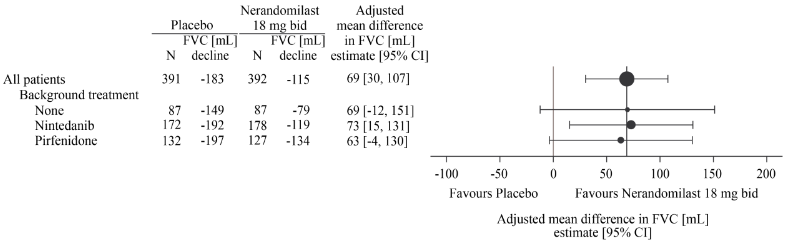
For patients who died before week 52, the 10th percentile change from baseline value was assigned.
bid = twice daily
Figure 2. Absolute change from baseline in FVC (mL) at 52 weeks in the FIBRONEER-IPF study for patients receiving 9 mg nerandomilast compared to placebo:
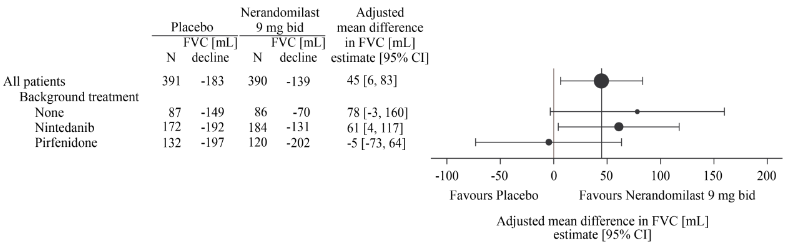
For patients who died before week 52, the 10th percentile change from baseline value was assigned.
bid = twice daily
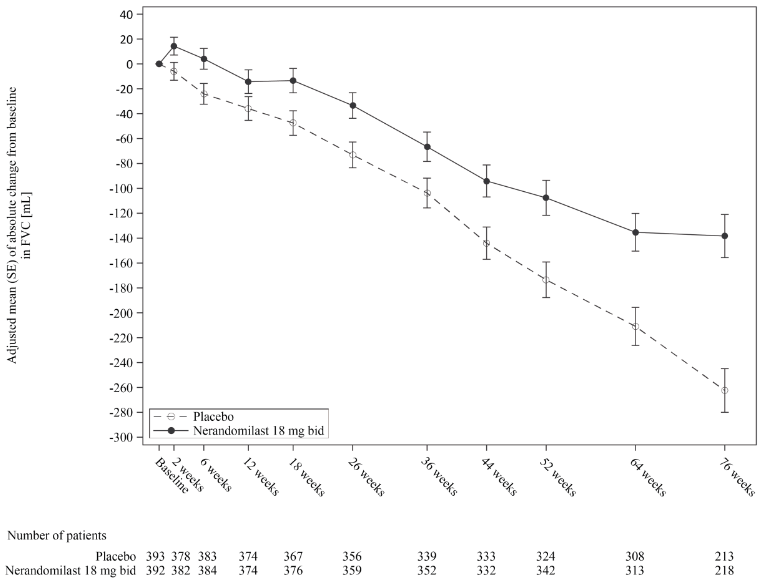
Figure 3 shows the change in FVC from baseline over time in patients receiving nerandomilast 18 mg twice daily compared to matching placebo. When the mean adjusted FVC change from baseline was plotted over time, the curves started to separate at week 2 and continued to diverge up to week 52 and beyond. This effect over time was consistently observed across the subgroups by background IPF treatment.
Figure 3. Change from baseline in FVC (mL) over time in the FIBRONEER-IPF study for patients receiving 18 mg nerandomilast compared to placebo:
bid = twice daily
Time to first acute IPF exacerbation, first hospitalisation for respiratory cause, or death
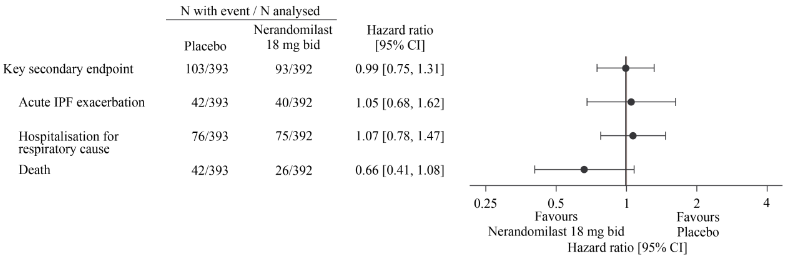
The key secondary composite endpoint was the time to the first event of acute IPF exacerbation, hospitalisation for respiratory cause, or death over the duration of the trial. Acute IPF exacerbation was defined as acute worsening or development of dyspnoea typically less than 1 month duration, computed tomography with new bilateral ground-glass opacity and/or consolidation superimposed on a background pattern consistent with IPF, and deterioration not fully explained by cardiac failure or fluid overload. Neither acute IPF exacerbations nor respiratory hospitalisations were adjudicated. Overall, there was no statistically significant treatment difference for the nerandomilast 18 mg or 9 mg groups compared to placebo for the key secondary composite endpoint. At the time of main analysis, key secondary endpoint events occurred in 85 patients (22%) in the 18 mg group, in 79 patients (20%) in the 9 mg group, and in 80 patients (20%) in the placebo group. Compared with placebo, the hazard ratio (HR) for time to first event was 1.17 (95% CI: 0.86, 1.59; p = 0.3102) for the 18 mg dose and 1.03 (95% CI: 0.75, 1.41; p = 0.8568) for the 9 mg dose.
See Figure 4 and Figure 5 for results of nerandomilast 18 mg and 9 mg versus placebo for the key secondary endpoint and its components over the duration of the FIBRONEER-IPF study at the time of the end-of-trial analysis.
Figure 4. Acute IPF exacerbation, hospitalisation for respiratory cause or death over the duration of the FIBRONEER-IPF study for patients receiving 18 mg nerandomilast compared to placebo:
bid = twice daily
Figure 5. Acute IPF exacerbation, hospitalisation for respiratory cause or death over the duration of the FIBRONEER-IPF study for patients receiving 9 mg nerandomilast compared to placebo:
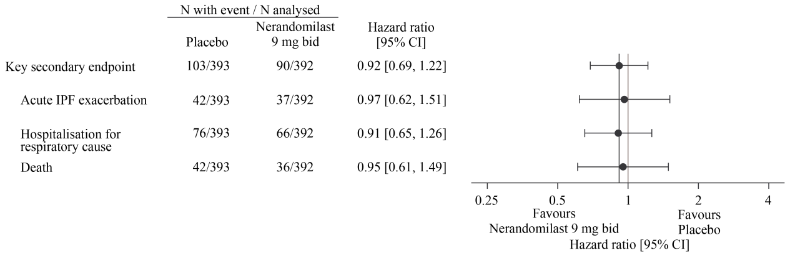
Results are shown for the overall population receiving nerandomilast 9 mg twice daily versus matching placebo.
bid = twice daily
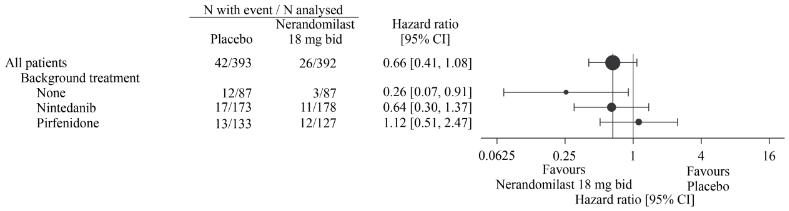
At the end-of-trial analysis deaths occurred in 26 patients (7%) in the 18 mg group, in 36 patients (9%) in the 9 mg group, and 42 patients (11%) in the placebo group. Compared with placebo, the hazard ratio for time to death was 0.66 (95% CI: 0.41, 1.08) for the 18 mg dose and 0.95 (95% CI: 0.61, 1.49) for the 9 mg dose.
Figure 6 and Figure 7 show the analysis of time to death over the whole trial (end-of-trial analysis) in the nerandomilast 18 mg and 9 mg dose groups, respectively versus matching placebo for the subgroups by background treatment.
Figure 6. Time to death over the duration of the FIBRONEER-IPF study for patients receiving 18 mg nerandomilast compared to placebo:
bid = twice daily
Figure 7. Time to death over the duration of the FIBRONEER-IPF study for patients receiving 9 mg nerandomilast compared to placebo:
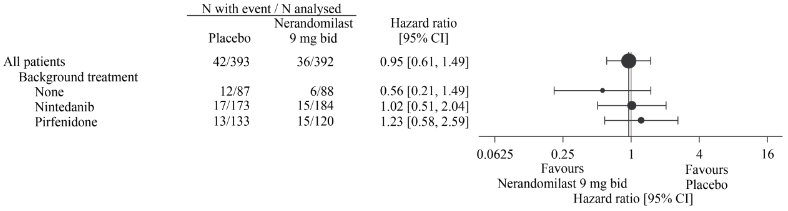
Results are shown for the overall population receiving nerandomilast 9 mg twice daily versus matching placebo.
bid = twice daily
Progressive Pulmonary Fibrosis (PPF)
A randomised, double-blind, placebo-controlled trial (FIBRONEER-ILD) evaluated the clinical efficacy and safety of nerandomilast in adult patients with PPF. Patients with PPF were selected if they had relevant fibrosis (greater than 10% fibrotic features) on high resolution computed tomography (HRCT) and presented with clinical signs of progression (defined as Forced Vital Capacity (FVC) decline greater than or equal to 10%, FVC decline greater than or equal to 5% and less than 10% with worsening of respiratory symptoms or imaging, or worsening of respiratory symptoms and worsening imaging all in the 24 months prior to screening). Patients were required to have an FVC greater than or equal to 45% of predicted and a diffusing capacity of the lungs for carbon monoxide (DLCO) greater than or equal to 25% of predicted normal corrected for haemoglobin (Hb). Eligible patients were or were not on stable background treatment with nintedanib. 1 178 patients were randomised in a 1:1:1 ratio to receive nerandomilast 9 mg twice daily, nerandomilast 18 mg twice daily, or placebo twice daily for at least 52 weeks. Randomisation was stratified by the presence or absence of background treatment with nintedanib and by high resolution computed tomography (HRCT) pattern (usual interstitial pneumonia (UIP) or UIP-like fibrotic pattern versus Other fibrotic patterns) using central review.
The primary endpoint of the trial was the absolute change from baseline in FVC in mL at 52 weeks compared with placebo. The key secondary endpoint was the time to the first occurrence of any of the components of the composite endpoint: the first acute Interstitial Lung Disease (ILD) exacerbation, first hospitalisation for respiratory cause, or death over the duration of the trial. Patients were followed for a median time of 15.4 months at the time of main analysis and 17.2 months at the end-of-trial analysis.
The study population consisted of 56% men and 44% women with a mean age of 66 years (range: 26 to 88 years). 20% of patients were 75 years and older. 58% of the study population were White, 39% Asian and 1% Black or African American. Pulmonary hypertension was reported in 5% of patients at baseline.
44% of the patients were on stable treatment with nintedanib and 56% not treated with nintedanib (44% of patients were treatment naïve and 12% previously discontinued nintedanib treatment). On baseline HRCT, 71% of the patients had UIP or UIP-like fibrotic pattern and 29% of the patients had other fibrotic patterns. The underlying clinical ILD diagnoses were autoimmune ILDs (28%), hypersensitivity pneumonitis (20%), unclassifiable idiopathic interstitial pneumonia (20%), idiopathic nonspecific interstitial pneumonia (19%), and other ILDs (14%). At baseline, the mean FVC was 2 353 mL and 70% of predicted normal. Patients receiving background treatment with nintedanib had more advanced disease at baseline compared with patients not receiving background treatment, as reflected by a slightly lower mean FVC % predicted (69% versus 71%), a lower mean DLCO % predicted (45% versus 52%), a slightly longer mean time since first ILD diagnosis (4.4 years versus 4.0 years), and more frequent use of supplemental oxygen (38% versus 19%).
Change from baseline in FVC
Overall, the primary endpoint of absolute change from baseline in FVC (in mL) at 52 weeks in patients receiving nerandomilast was statistically significantly improved compared with patients receiving placebo.
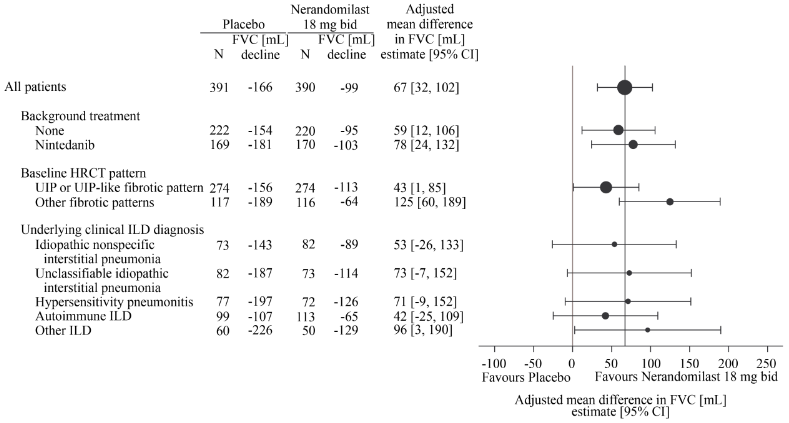
The adjusted mean decline in patients receiving 18 mg or 9 mg nerandomilast twice daily was -99 mL and -85 mL, respectively, whereas in the placebo group, an adjusted mean decline of -166 mL was observed. The respective treatment difference compared with the placebo group was 67 mL (95% CI: 32, 102; p-value: 0.0002) and 81 mL (95% CI: 46, 116; p-value: < 0.0001).
The primary analysis was consistent across pre-specified subgroups by presence or absence of nintedanib background treatment, HRCT pattern, and underlying clinical ILD diagnoses. See Figure 8 and Figure 9.
Figure 8. Absolute change from baseline in FVC (mL) at 52 weeks in the FIBRONEER-ILD study for patients receiving 18 mg nerandomilast compared to placebo:
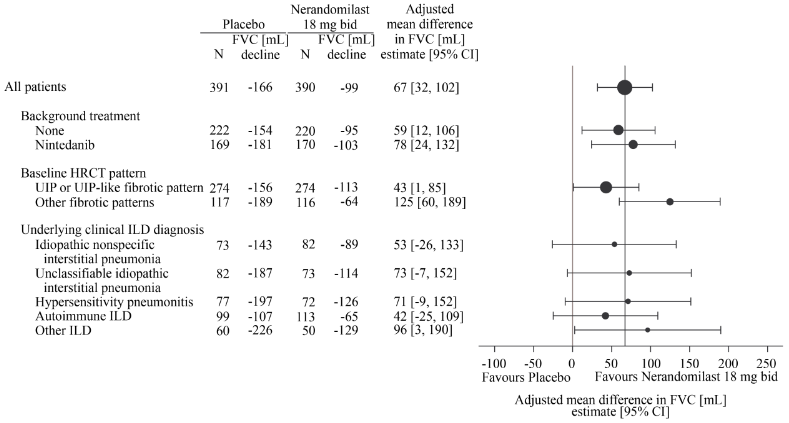
For patients who died before week 52, the 10th percentile change from baseline value was assigned.
bid = twice daily
Figure 9. Absolute change from baseline in FVC (mL) at 52 weeks in the FIBRONEER-ILD study for patients receiving 9 mg nerandomilast compared to placebo:
For patients who died before week 52, the 10th percentile change from baseline value was assigned.
bid = twice daily
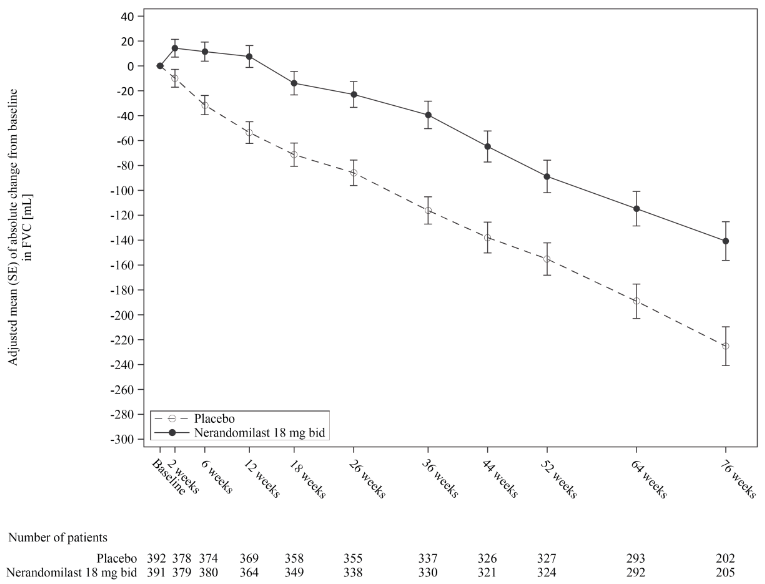
Figure 10 shows the change in FVC from baseline over time in patients receiving nerandomilast 18 mg twice daily compared to matching placebo. When the mean adjusted FVC change from baseline was plotted over time, the curves started to separate at week 2 and separation was maintained up to week 52 and beyond. This effect over time was consistently observed regardless of background nintedanib treatment.
Figure 10. Change from baseline in FVC (mL) over time in the FIBRONEER-ILD study for patients receiving 18 mg nerandomilast compared to placebo:
bid = twice daily
Time to first acute ILD exacerbation, first hospitalisation for respiratory cause, or death
The key secondary composite endpoint was the time to the first event of acute ILD exacerbation, hospitalisation for respiratory cause, or death over the duration of the trial. Acute ILD exacerbation was defined as acute worsening or development of dyspnoea typically less than 1 month duration, computed tomography with new bilateral ground-glass opacity and/or consolidation superimposed on a background pattern consistent with fibrosing ILD, and deterioration not fully explained by cardiac failure or fluid overload. Neither acute ILD exacerbations nor respiratory hospitalisations were adjudicated.
The risk for the key secondary endpoint was numerically lower for both nerandomilast dose groups compared to placebo. At the time of the main analysis, key secondary endpoint events occurred in 95 patients (24%) in the 18 mg group, 110 patients (28%) in the 9 mg group, and 122 patients (31%) in the placebo group. Compared with placebo, the hazard ratio for time to first event was 0.77 (95% CI: 0.59, 1.01; p-value: 0.0602) for the 18 mg dose and 0.88 (95% CI: 0.68, 1.14; p-value: 0.3398) for the 9 mg dose.
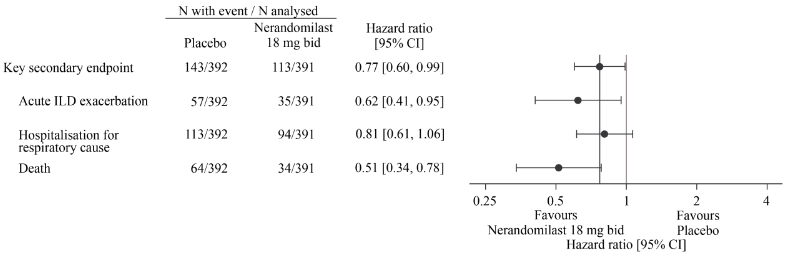
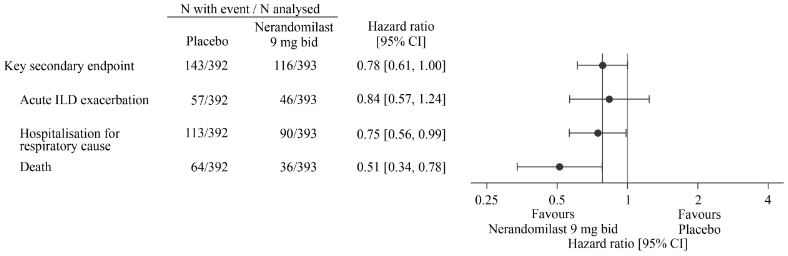
See Figure 11 and Figure 12 for results of nerandomilast 18 mg and 9 mg versus placebo for the key secondary endpoint and its components over the duration of the FIBRONEER-ILD study at the end-of-trial analysis.
Figure 11. Acute ILD exacerbation, hospitalisation for respiratory cause or death over the duration of the FIBRONEER-ILD study for patients receiving 18 mg nerandomilast compared to placebo:
bid = twice daily
Figure 12. Acute ILD exacerbation, hospitalisation for respiratory cause or death over the duration of the FIBRONEER-ILD study for patients receiving 9 mg nerandomilast compared to placebo:
bid = twice daily
The results of the key secondary endpoint were generally consistent regardless of background nintedanib treatment or HRCT pattern.
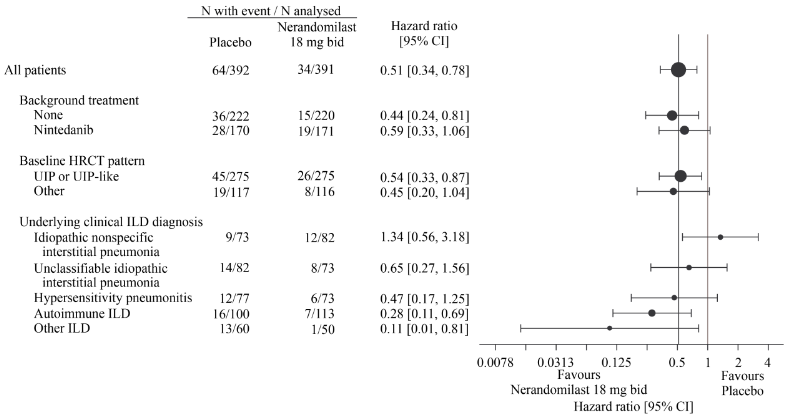
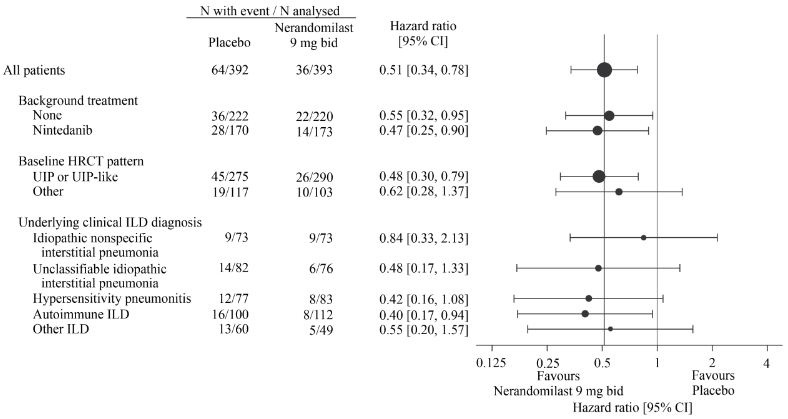
At the end-of-trial analysis deaths occurred in 34 patients (9%) in the 18 mg group, in 36 patients (9%) in the 9 mg group, and 64 patients (16%) in the placebo group. Compared with placebo, the hazard ratio for time to death was 0.51 (95% CI: 0.34, 0.78) for the 18 mg dose and 0.51 (95% CI: 0.34, 0.78) for the 9 mg dose.
Figure 13 and Figure 14 show the analysis of time to death over the whole trial (end-of-trial analysis) in the nerandomilast 18 mg and 9 mg dose groups, respectively versus matching placebo for the subgroups by background treatment and HRCT pattern, as well as by underlying clinical ILD diagnosis.
Figure 13. Time to death over the duration of the FIBRONEER-ILD study for patients receiving 18 mg nerandomilast compared to placebo:
bid = twice daily
Figure 14. Time to death over the duration of the FIBRONEER-ILD study for patients receiving 9 mg nerandomilast compared to placebo:
bid = twice daily
Paediatric population
The European Medicines Agency has deferred the obligation to submit the results of studies with Jascayd in one or more subsets of the paediatric population in fibrosing interstitial lung disease (see section 4.2 for information on paediatric use).
5.2. Pharmacokinetic properties
The pharmacokinetics of nerandomilast have been characterised in healthy volunteers, patients with IPF and patients with PPF. No clinically relevant differences in pharmacokinetics of nerandomilast were noted between these populations.
Absorption
Nerandomilast reached peak plasma concentrations (Cmax) at a median time (Tmax) of 1.00-1.25 h (range between 0.5-4 hours) after oral administration of 9 mg and 18 mg doses. The absolute oral bioavailability of nerandomilast was 73% (90% CI: 67-79%).
Administration of 18 mg nerandomilast with a high-fat and high caloric meal did not change nerandomilast exposure to a clinically relevant extent (AUC increased by approximately 15% while Cmax decreased by approximately 14%).
Distribution
After single intravenous administration of nerandomilast, the geometric mean volume of distribution Vss was approximately 94 L (gCV 32.0%). In vitro, nerandomilast was a substrate of the transporter protein P-gp, but not of BCRP, OATP1B1, OATP1B3, OAT1, OAT3, and OCT2.
In vitro human plasma protein binding of nerandomilast was 77% with no concentration dependence.
In healthy volunteers, nerandomilast was preferentially distributed in plasma with a blood-to-plasma ratio of 0.6-0.8.
Biotransformation
Nerandomilast is mainly metabolised via oxidation by CYP3A and glucuronidation by multiple uridine-5′-diphospho-glucuronosyltransferase enzymes.
Following single oral administration, nerandomilast was the primary circulating component representing approximately 50% of circulating radioactivity.
After multiple oral administrations of 12 mg nerandomilast twice daily, the only major metabolite identified in plasma at steady state was the di-oxidative metabolite BI 764333/M480(4). This pharmacologically inactive metabolite represented 12% of the total plasma material at steady state consisting of both parent compound and all its metabolites.
Nerandomilast has a chiral sulfur atom and Jascayd predominantly contains chirally pure nerandomilast (R-enantiomer). After oral administration of nerandomilast, chiral inversion from R-enantiomer to S-enantiomer occurs via metabolism. The S-enantiomer was identified as a minor (3% of total circulating radioactivity) metabolite of nerandomilast and is pharmacologically inactive. The pharmacologically active R-enantiomer remained as the predominant circulating enantiomer.
Elimination
Following multiple oral doses of 18 mg nerandomilast twice daily, the terminal half-life was approximately 10 to 17 h and the geometric mean apparent plasma clearance at steady state was 274 mL/min with inter-individual variability (gCV%) of 23.6%. After oral administration of a single 18 mg dose of radiolabelled nerandomilast, approximately 95% of the dose was recovered within 9 days after dosing, with 58% recovered in faeces (13% unchanged) and 36% recovered in urine (12% unchanged).
Linearity/non-linearity
Nerandomilast exhibited dose proportional pharmacokinetics following oral administration of both, single doses (0.06 to 48 mg) and multiple doses (1 to 18 mg twice daily). Following oral administration of 18 mg nerandomilast twice daily, steady state was achieved within 4 days with an accumulation ratio of up to 1.38 based on AUC and Cmax.
PK in specific populations
Age, sex, ethnicity, renal or hepatic impairment
No clinically significant differences in the pharmacokinetics of nerandomilast were observed based on age (18-90 years), sex, ethnicity (Hispanic/Latino or not Hispanic/Latino), mild, moderate, and severe renal impairment (eGFR ≥15 and <90 mL/min based on CKD-EPI formula), or mild (Child Pugh A) or moderate (Child Pugh B) hepatic impairment. Subjects with end stage renal disease and subjects with severe hepatic impairment (Child Pugh C) have not been studied.
Race
Asian patients have up to 47% higher nerandomilast trough concentration compared to White patients. This effect is not expected to be clinically meaningful.
Body weight
A population PK analysis indicated higher nerandomilast exposure in patients with lower body weight and lower exposure in patients with higher body weight. The impact of body weight on nerandomilast plasma concentrations is not expected to be clinically meaningful.
Pharmacokinetic/pharmacodynamic relationship(s)
Increases in nerandomilast steady state trough concentrations were associated with better efficacy in patients with IPF and PPF, as indicated by a smaller reduction in absolute Forced Vital Capacity (FVC) from baseline over 52 weeks.
5.3. Preclinical safety data
General toxicology
Non-clinical data reveal no special hazard for humans based on conventional studies of safety pharmacology, genotoxicity and carcinogenicity. There is no evidence of phototoxic potential.
Repeat-dose toxicity studies were conducted in rats, minipigs, and monkeys. Vasculopathy (inflammation, haemorrhage, and blood vessel necrosis) was the primary finding observed in the rat and minipig. No adverse vascular effects were observed in monkeys administered up to 30 mg/kg/day (10-times human exposure based on AUC at the maximum recommended human dose (MRHD) (see section 4.2)). Adverse vascular effects observed in rats and in minipigs affected various tissues (i.e., mesentery and GI tract in rats, heart and lung in minipigs). In long-term studies, no adverse vascular changes were observed in rats at 2 mg/kg/day, and vascular changes were observed in one minipig at 3 mg/kg/day (both equivalent to human exposure, based on AUC at the MRHD). The exposure margin in monkeys, considered the most relevant species to humans, suggests that primates are less sensitive to vascular effects than other species.
In toxicology studies in monkeys at exposures higher than 10-times human exposure based on AUC at the MRHD, emesis and heart findings (focal degeneration or necrosis not accompanied by vascular changes) were observed.
Reproductive and developmental toxicology
Fertility and early embryonic development
In a fertility study in male rats, nerandomilast administration at a dose of 6 mg/kg/day (approximately 4-times human exposure based on AUC at the MRHD) showed no effect on mating, fertility, or sperm indices.
In female rats, decreased indices for mating and fertility were observed at the highest tested dose of 9 mg/kg/day (approximately 9-times human exposure based on AUC at the MRHD) and were related to general toxicity. No such effects were observed at the No Observed Adverse Effects Level (NOAEL) dose of 6 mg/kg/day (approximately 4-times human exposure at the MRHD). In the fertility and early embryonic development and the embryo-foetal development studies, an increase in early resorptions was observed in rats at doses ≥6 mg/kg/day. No such effects were observed at the NOAEL dose of 3 mg/kg/day (approximately 3-times human exposure at the MRHD).
Sexually mature female monkeys administered nerandomilast for 39 weeks showed sporadic menstrual cycle prolongation at dose levels of 10 mg/kg/day and 30 mg/kg/day (approximately 3- or 10-times human exposure based on AUC at the MRHD). Menstrual cycles were not affected in monkeys at 3 mg/kg/day (equivalent to human exposure based on AUC at the MRHD). No changes in oestrous cycles were observed in rats.
Embryo-foetal development
Following administration of radiolabelled nerandomilast to pregnant rats, radioactivity was detected in placenta, embryo-foetal blood and tissues, suggesting transfer across the placental barrier.
Embryo-foetal development studies in rats and rabbits showed no teratogenicity, no skeletal variations and no fetotoxicity up to the highest tested dose levels of 9 mg/kg/day and 15 mg/kg/day, equivalent to 7- and 4-times human exposure based on AUC at the MRHD, respectively. Embryo-foetal lethality due to post-implantation loss related to an increase in early resorptions was observed in rats at the dose of 6 mg/kg/day (5-times human exposure based on AUC at the MRHD) administered from gestation day 6 to 17. No embryo-foetal lethality was observed in rats and rabbits at the NOAEL dose of 3 mg/kg/day and 15 mg/kg/day (approximately 3- and 4-times human exposure based on AUC at the MRHD, respectively).
Pre- and postnatal development
In a dose range-finding pre- and postnatal development study in rats, a maternal dose of 6 mg/kg/day (approximately 5- to 6-times human exposure at the MRHD) from gestation day 6 to lactation day 6 resulted in lower pup weights. In the pivotal pre- and postnatal development study, nerandomilast administered to pregnant female rats from gestation day 6 to lactation day 20, had no adverse effects on maternal performance or toxicity or on F1 generation (offspring) development, behaviour, and reproductive performance up to the highest tested dose of 3 mg/kg/day (approximately 2-times human exposure based on AUC at the MRHD). In this study, nerandomilast was present in the plasma of rat pups during the lactation period.
In a single dose milk secretion study in lactating rats dosed with radiolabelled nerandomilast by the oral route, similar concentrations of total radioactivity were observed in the milk and plasma of lactating females, with the maximum radioactive concentration observed at 1 hour post dose that was significantly reduced by 24 hours post dose. The concentration of total radioactivity in animal milk does not necessarily predict the concentration of the active substance in human milk.
© All content on this website, including data entry, data processing, decision support tools, "RxReasoner" logo and graphics, is the intellectual property of RxReasoner and is protected by copyright laws. Unauthorized reproduction or distribution of any part of this content without explicit written permission from RxReasoner is strictly prohibited. Any third-party content used on this site is acknowledged and utilized under fair use principles.